Painter and Engraver
New Caledonia
Born on
Isabelle Staron-Tutugoro
“Culture has several unique properties: it is shared, learned, symbolic, transmitted cross-generationally, adaptive, and integrated.” Anthropologist John H. Bodley Born 3rd July 1964 in Saint-Symphorien-sur-Coise, a village in the Lyon area, Isabelle Staron exhibits on her own in her native village at the age of 15 in 1968 when she discovers New Caledonia, its colours and its lights, she really feels need to paint.
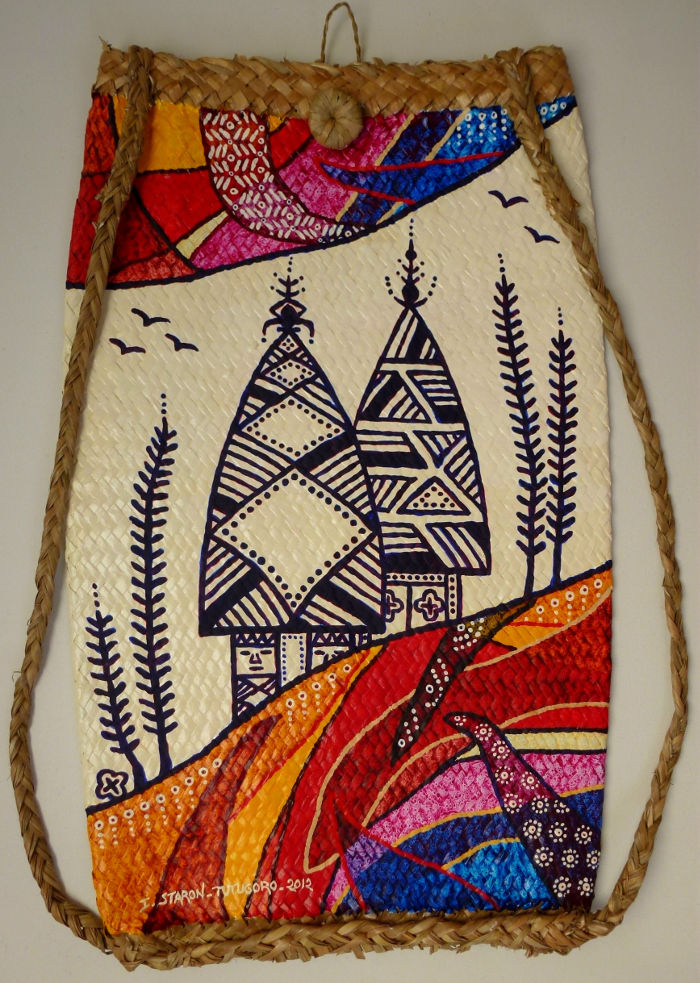
Oceanian inspiration
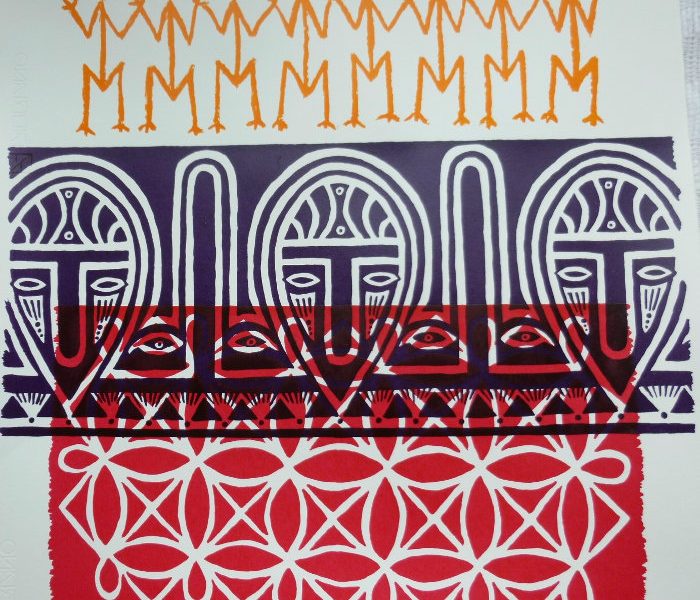
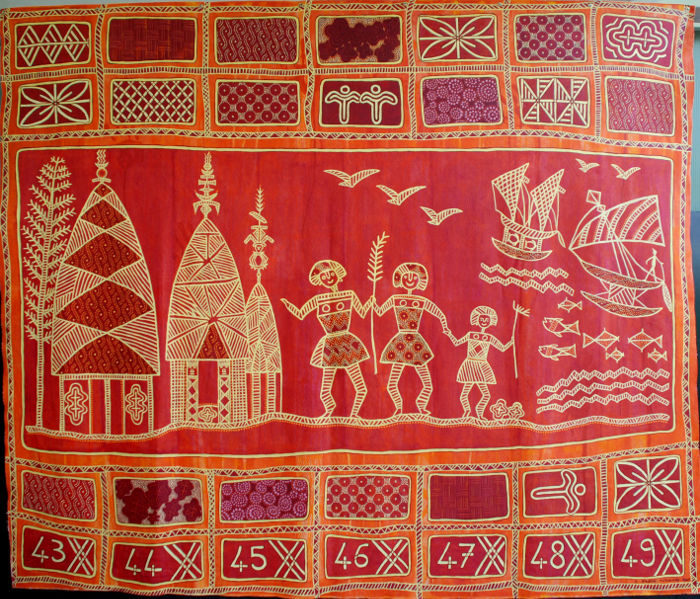
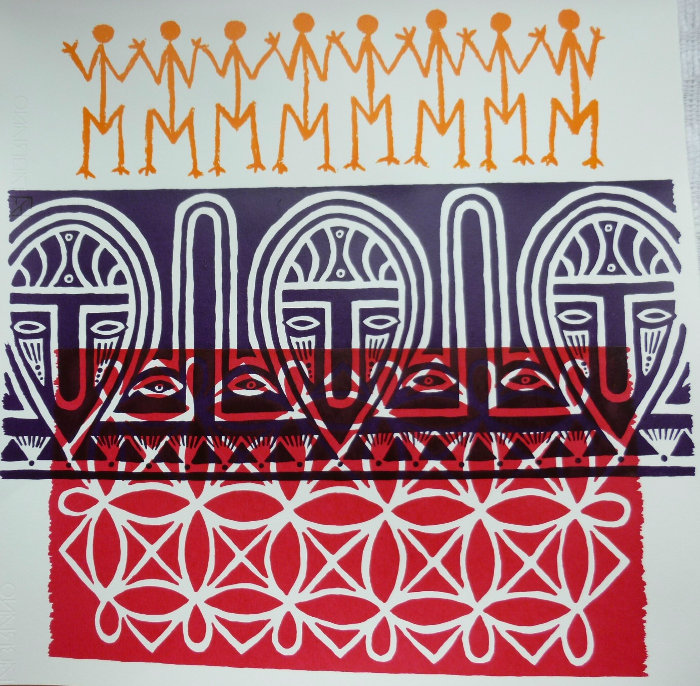
With her family, her husband Joachim Tutugoro and her son Anthony, she settles in 1996 in Poindimié, in the North Province. Since that time, she takes great interest in indigenous symbols, petroglyphs and Kanak carved bamboos, Oceanian tapas and Lapita potteries that all prompted her to explore other Pacific cultures. During the last 20 years, she has been carrying research in New Caledonia but also in the Western Samoa, Cook Islands, French Polynesia, Hawaii, Australia, Vanuatu and the mysterious Easter Island.Caledonian petroglyphs
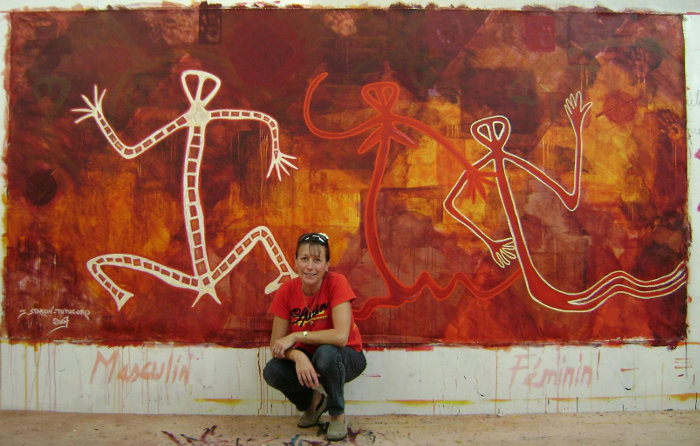
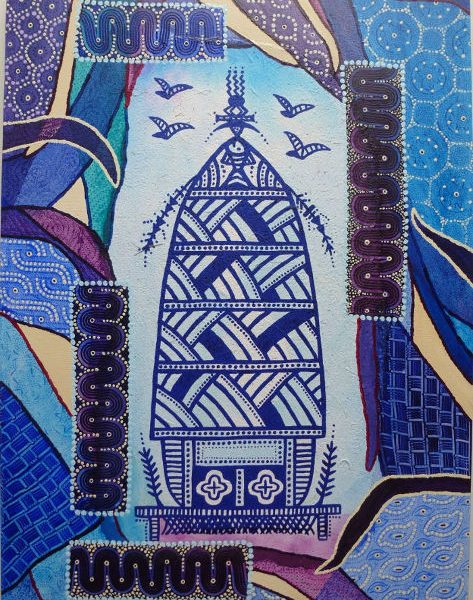
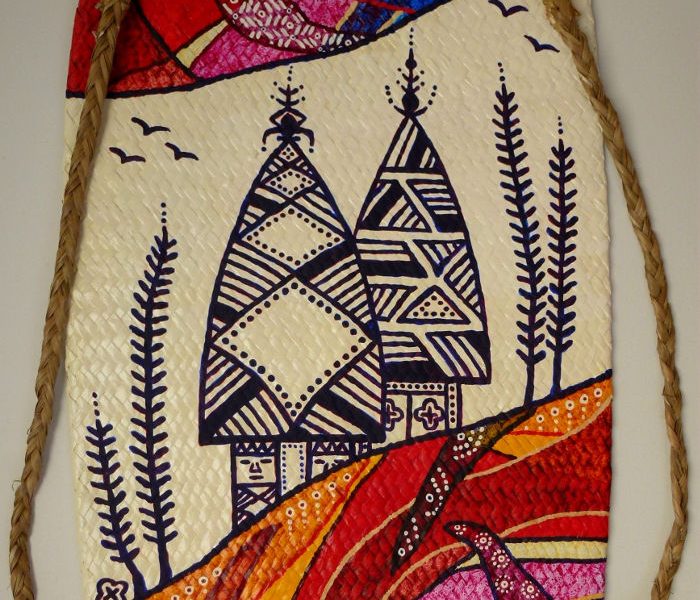
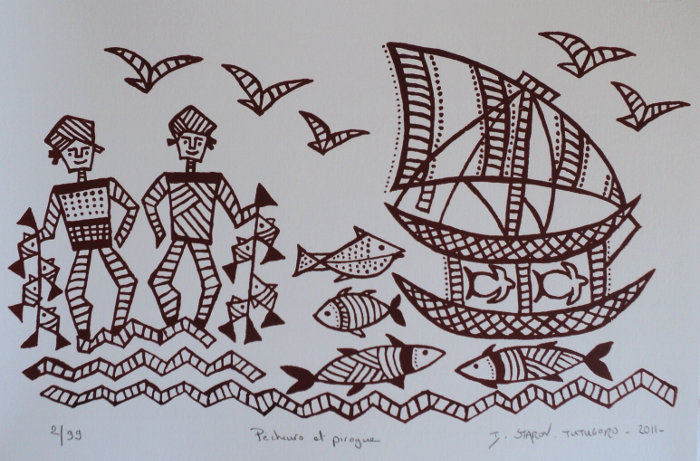
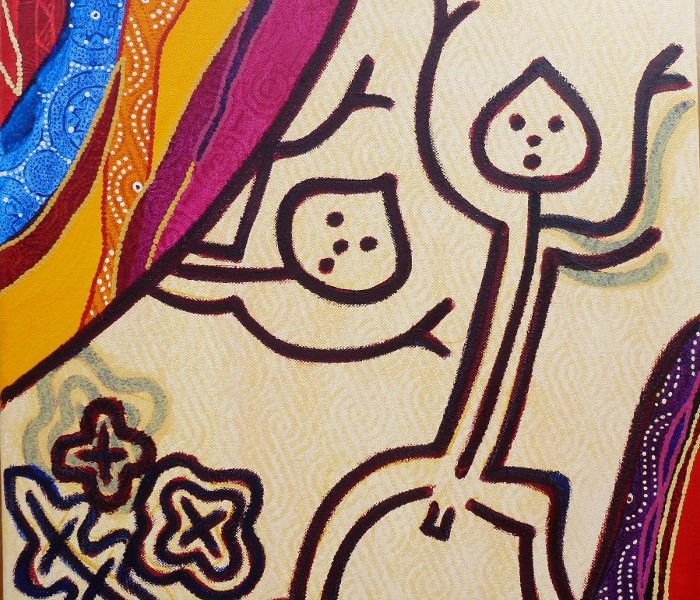
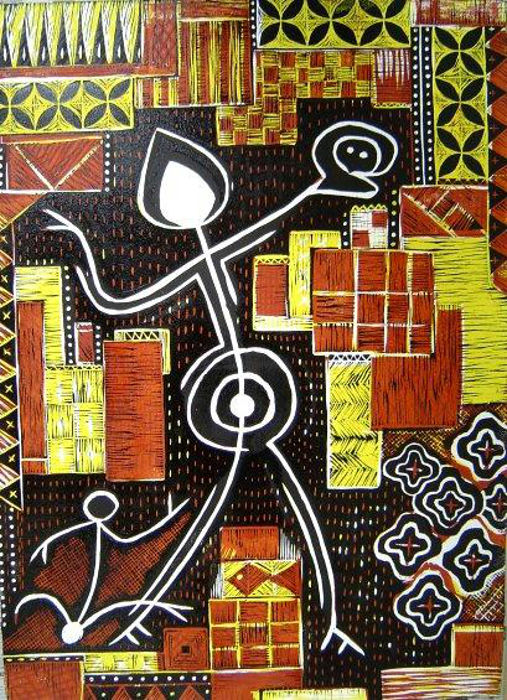
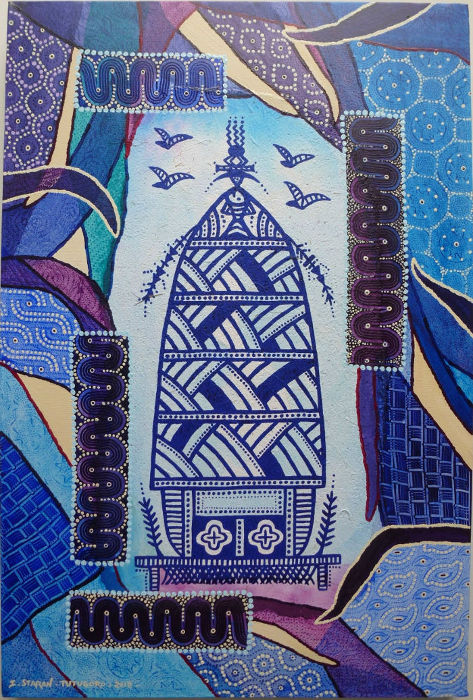
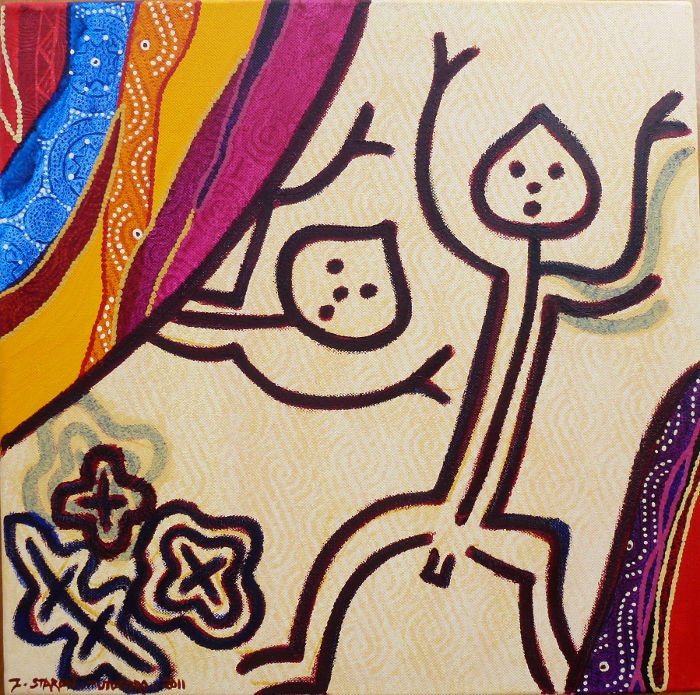
New Caledonia is lucky enough that many petroglyphs have been preserved specially in the North eastern region where she lives. The motives she incorporates in her acrylic paintings and her wood or linocut engravings draw their inspiration from petroglyphs from the Nambai valley, the ancestral land of her husband’s family. Many of them are anthropomorphic or represent crosses. As the artist explains: “I believe these petroglyphs were once carved to leave us a history, a knowledge, or a story regarding specific families and clans. I interpret them through my works as different stages of the circles of life: pregnancy, birth, family… I feel something special, mysterious and sacred in their presence. The rocks on which the original petroglyphs were carved are huge and you can only feel humble and respectful in front of such amazing pieces of work – especially with the knowledge that there were created without the use of mechanical tools! I pay tribute to the culture and heritage of the Kanak people, to whom I dedicate my work.” Very few people know how to read this carved heritage. Christophe Sand, a famous New Caledonian archeologist, published a book on petroglyphs which has become a reference in the field: “Kibo, le serment gravé” (The Carved Pledge)South Pacific influence
Since 2001, she has been sharing her time and work between New Caledonia and New Zealand, where she has the mentorship and support of renowned Samoan-NZ artist Fatu Feu’u, considered the father of contemporary Pacific art. She has exhibited her work in New Zealand, the South Pacific and Europe since 1996. Being a self-taught artist herself, she is very appreciative of the support that renowned artists give her: Jeff Lochart, Andy Leleisi’uao and Llew Summers. Her work has been on display since 1996, mostly in New Caledonia, New Zealand, Rorotonga, Samoa, France and Australia and during a major exhibition for the 8th festival of the Arts in the Pacific. A retrospective exhibition took place in October 2006 in her native village and in 2007 she participated in a major exhibition with her mentor Fatu Feu’u “Yesterday, Today, Tomorrow” at the Tjibaou Cltural Center in Noumea. The Maison de la Calédonie in Paris displayed her work in November 2010. “Culture has several unique properties: it is shared, learnt, symbolic, transmitted cross generationally, adaptive, and integrated.” Anthropologist John H. Bodley.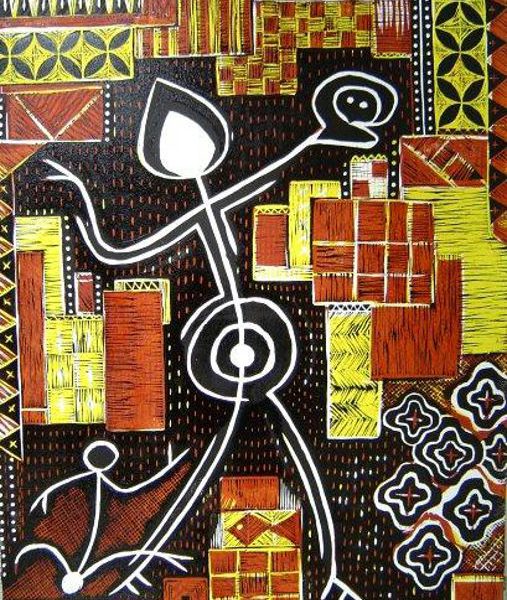
Shop
No posts found!